Switzerland: inflation hits 1.5%, the end of zero rates nears
Inflation at its highest since 2023, the ECB and the Fed already higher, a strong franc: what an SNB hike would mean for mortgages, rents and savings
by
Eric Fankhauser
Swiss inflation reached 1.5% in October, its highest since 2023. The SNB, the last major central bank still at 0%, decides on 10 December. What a hike would mean for SARON and fixed-rate mortgages, rents, property and savings in Switzerland.
For more than a year, Switzerland enjoyed a rare kind of calm: inflation close to zero, a policy rate of 0%, some of the cheapest mortgages in the world and a rock-solid franc. The figures published on 3 November by the Federal Statistical Office have cracked that picture. In October, consumer prices rose by 1.5% year on year, up from 1.0% in September and 0.4% in July. That is the highest reading since December 2023, and well above economists' expectations of 1.1% to 1.4%.
The number changes the outlook for the Swiss National Bank's next decision, due on 10 December. Until now, the SNB has been the last major central bank holding rates at zero, and its own forecasts did not see inflation above 1% before 2028. Those forecasts are already out of date.
We work with many Swiss clients, as well as international investors who hold part of their wealth in francs: expatriates, Gulf-based families, entrepreneurs with Swiss bank accounts. In recent weeks, the same question has come up in almost every meeting: is the era of free money ending in Switzerland, and what does that mean for savings, mortgages and property?
Where the inflation is coming from
October's jump is mainly about energy. The war in the Middle East has pushed up the price of heating oil, petrol and diesel. Transport prices are now 5.3% higher than a year ago, compared with 3.6% in September, and housing and energy are up 2.5%. Imported goods cost 3.7% more than a year ago, while domestic goods are up just 0.8%.
That is why the SNB can play it down. Core inflation, which strips out volatile items such as fuel, is stable at 0.5%. SNB chairman Martin Schlegel keeps repeating that inflationary pressure remains contained. At its last decision on 24 September, the central bank held its rate at 0%, describing its policy as appropriate to keep inflation within the range of price stability. But it had already raised its forecasts to 0.7% for 2026 and 0.8% for 2027 and 2028, acknowledging that inflation had kept rising since June, mainly because of higher energy prices.
One month later, measured inflation is double the annual forecast. Energy may explain most of the move, but the gap is becoming hard to ignore.
Swiss inflation has almost quadrupled in three months.
A rate hike in December?
Opinions differ, and that in itself is new. Before September's decision, all 18 economists surveyed by the AWP news agency expected rates to stay at zero. Today the consensus is fraying.
GianLuigi Mandruzzato, economist at EFG, says the probability of a hike in December or March has increased. Raiffeisen goes further: the SNB could abandon its wait-and-see stance as early as December and begin a gradual exit from zero rates, if the economy holds up and energy stays expensive. UBS sees no urgency, but says the risks are rising. Financial markets are already pricing in a first hike in early 2027.
The international backdrop points the same way. The European Central Bank has raised rates twice this year, in June and September, taking its deposit rate to 2.50%. In the United States, the Federal Reserve held its target range at 3.75% to 4% on 28 October, but two members of its committee voted for a hike, noting that inflation remains elevated. Switzerland now stands alone with a zero rate.
Switzerland, the last major economy at zero.
A franc that stays strong against the euro
There is a paradox here. With the ECB raising rates and the SNB staying at zero, you might expect the franc to weaken against the euro. It has not: on 6 November, one euro was worth 0.914 francs, and the Swiss currency has gained almost 2% against the euro over the past year. Against the dollar, the franc softened over the summer before firming again in early November.
That is the other reason for the SNB's caution. A very strong franc hurts exporters and lowers import prices, which dampens inflation. Raising rates would strengthen the currency further. The central bank reminded markets in September that it remains willing to intervene in the foreign exchange market if needed.
Diversify beyond Switzerland
Savings, property, currencies: let's talk about your wealth in 30 minutes.
For homeowners and buyers, the question is very practical. On 7 November, the best indicative rates published in Switzerland were around 0.91% for a SARON mortgage, 1.45% for a five-year fixed rate and 1.56% for a ten-year fixed rate. These are still very low levels, but they will not all react the same way.
A SARON mortgage tracks the policy rate almost mechanically. An SNB hike would therefore hit households on this formula straight away, and it has been very popular precisely because the policy rate was zero. Fixed rates depend on market rates, which already price in a moderate rise. Raiffeisen expects any further increase in long-term fixed mortgage rates to remain limited, even if the SNB moves before the end of the year.
These are headline rates. For an investment property or a second home, the rate actually offered is often higher, and equity requirements stricter. Swiss buy-to-let investors do not get the full benefit of cheap money.
Rents and the reference rate
Inflation and interest rates also feed directly into rents through the reference mortgage rate published by the Federal Housing Office. It currently stands at 1.25%, with the next publication on 1 December. It reflects the average of all outstanding mortgages, so it moves slowly.
For landlords, each quarter-point rise in the reference rate allows, in principle, a 3% rent increase. Conversely, each cut entitles tenants to ask for a reduction of around 2.9%. The reference rate is unlikely to move immediately, but a lasting rise in rates would eventually push it up. According to UBS, advertised rents were already 2.4% higher year on year in the second quarter of 2026, and existing rents 1.1% higher.
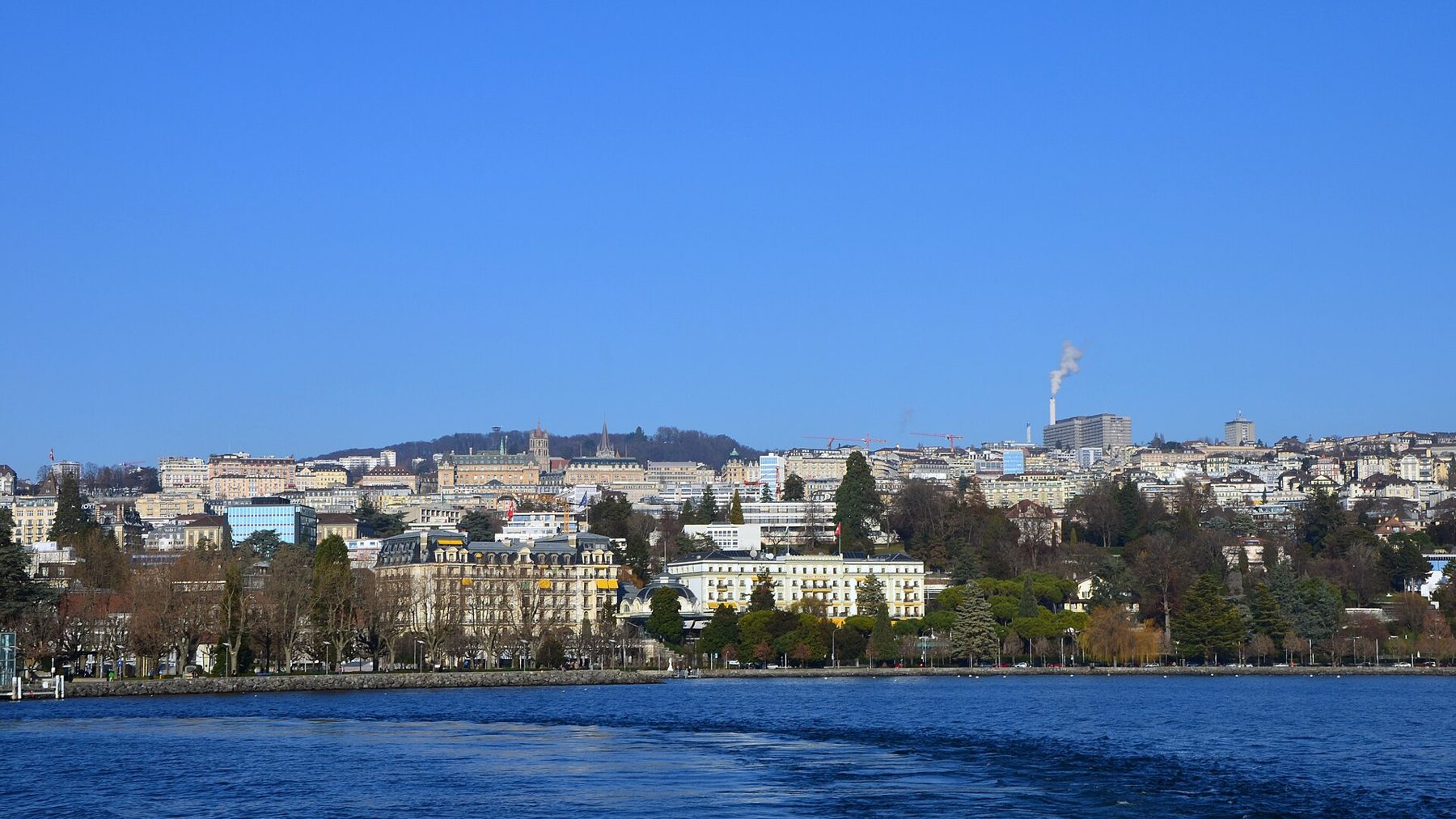
Lausanne, on Lake Geneva. UBS notes growing imbalances in the local property market. Photo: Gzzz, CC BY-SA 4.0, Wikimedia Commons
A Swiss property market already stretched
This is the market into which higher rates would arrive. Home prices keep rising faster than incomes and rents: UBS expects an increase of around 3% in 2026. Its real estate bubble index, still in the "moderate" zone, has risen for several quarters in a row, to 0.72 in the second quarter. The bank flags growing imbalances around Lake Geneva, particularly in the canton of Vaud, while Zurich and Geneva remain the most exposed regions.
Add to that the reform of home taxation. In September 2025, Swiss voters approved, by 57.7%, the abolition of the imputed rental value, the tax on the notional rent of owner-occupiers. The Federal Council has set the start date for 1 January 2029. In return, the deduction of mortgage interest on owner-occupied homes will largely disappear, and cantons will be able to introduce a special tax on second homes. With rates rising, losing that deduction will weigh more heavily on highly leveraged owners. We covered this background in our article on why more and more Swiss investors are investing abroad.
And for savers
In the end, savers feel the change first. With the policy rate at zero, Swiss savings accounts pay only token interest and Confederation bonds very little. While inflation stayed below 1%, the loss of purchasing power was small. With prices rising by 1.5% a year, it becomes noticeable: capital earning 0.5% loses around 1% of its real value every year.
A hike by the SNB would slightly improve returns on savings, but it would be gradual and modest. Nobody expects a quick return to 2023 levels, when the policy rate reached 1.75%. Swiss savers may face several quarters of negative real returns.
Our view
What strikes us in these figures is less the level of inflation, still moderate, than the end of a balance. Since 2025, Switzerland has offered a rare combination: almost free credit supporting property prices, non-existent inflation making unpaid savings bearable, and a safe-haven franc. The first two pillars are starting to shift.
For anyone with wealth in Switzerland, that raises two questions. The first is about debt: a SARON mortgage taken out when rates were zero deserves a fresh look before 10 December. The second is about allocation: when savings lose real value and local property is already very expensive, with low yields, it makes sense to ask whether part of one's wealth would work harder elsewhere. Many of our Swiss clients are having exactly that conversation, calmly and without rushing.
What to watch
November's inflation figures, published in early December, which will show whether October was an energy-driven peak or the start of a trend. The reference rate publication on 1 December. The SNB decision on 10 December, and above all its new inflation forecasts for 2027 and 2028. And the franc's path against the euro, which largely determines the central bank's room for manoeuvre.
Conclusion
With inflation at 1.5% in October, Switzerland is leaving behind the stillness that has defined its monetary policy since summer 2025. A hike on 10 December is not certain, but it is now on the table, while the ECB and the Fed have already acted. For homeowners, savers and investors, it is a good moment to review their exposure to the franc, to interest rates and to Swiss property. To explore another way of diversifying, visit our page on investing in Georgia.
Looking to diversify beyond Switzerland?
Some markets still offer property returns that Switzerland no longer does. If that interests you, let's take 30 minutes to talk. The first conversation comes with no commitment.