Georgia's 2027 budget: debt at 31.6% of GDP and almost a billion more in investment
A 2.5% deficit, rising tax revenue, GEL 8.4 billion of public investment: Georgia is growing without piling up debt
by
Adrien Boucher
Georgia's draft 2027 budget projects public debt at 31.6% of GDP, a 2.5% deficit and more than GEL 8.4 billion of public investment, with no tax increases. What the budget says about the country's trajectory, and why it matters for investors.
Georgia submitted its 2027 draft budget to parliament on 30 September. At a time when many governments are struggling with record debt and new taxes, the Georgian numbers stand out.
The Ministry of Finance projects public debt at 31.6% of GDP and a deficit limited to 2.5%. The consolidated budget reaches GEL 37.5 billion, up GEL 1.5 billion on 2026, and expected tax revenue rises by GEL 2.1 billion to GEL 29.5 billion.
In other words, the Georgian state is spending more because the economy is producing more, not because it is borrowing more.
Almost GEL 1 billion more in investment
Investment is at the heart of this budget. Capital spending exceeds GEL 8.4 billion, almost a billion more than in 2026. More than GEL 2.7 billion goes to municipal infrastructure, up to GEL 1.3 billion to roads, including GEL 723 million for highways, GEL 432 million to water and wastewater, and GEL 404 million to energy.
Several flagship projects are also funded: GEL 250 million to expand railway capacity, GEL 125 million for the Anaklia deep-sea port, GEL 125 million to modernise the Tbilisi metro and GEL 60 million for the Kutaisi airport runway.
Infrastructure, roads, rail, ports: the main investment lines in the 2027 budget.
Invest where debt stays low
Low debt, light taxation, a growing economy: let's talk about your Georgia project in 30 minutes.
The budget assumes growth of 5% in 2027, then 5.2 to 5.3% in the following years. That is a cautious assumption compared with the current year, for which the National Bank now expects 7.2%. Nominal GDP is projected to rise 8.9% in 2027, and GDP per capita to exceed USD 12,000 by the end of 2027 and USD 15,000 by 2030. Inflation is expected to return to the 3% target by the end of next year.
The budget also raises social spending: an extra GEL 400 million for education, GEL 127 million for healthcare, higher pensions and an 8.4% increase in public sector base salaries. No tax increases have been announced.
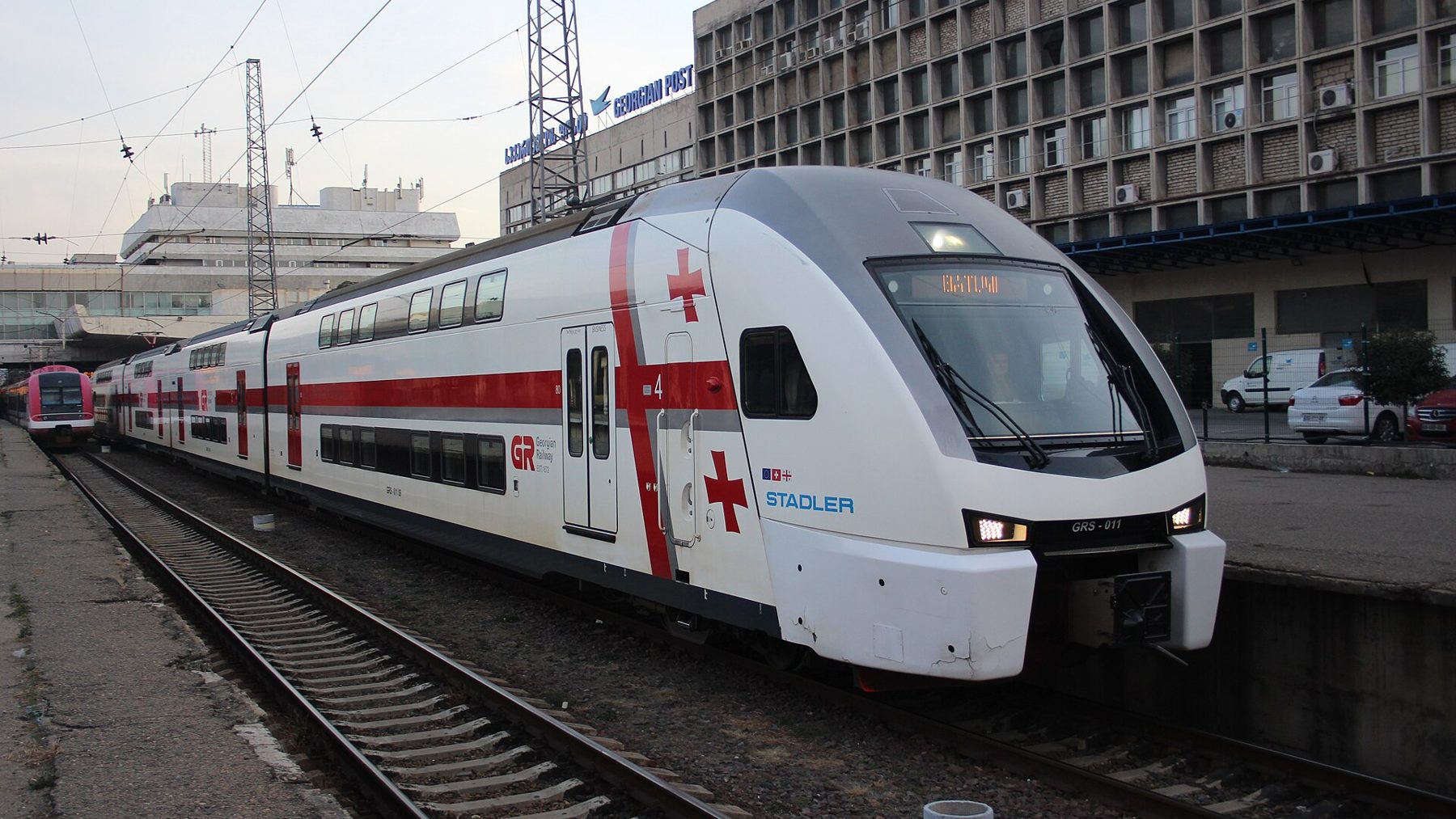
Rail, roads, the Anaklia port: the 2027 budget steps up investment in transport infrastructure. Photo: Superalbs, CC BY-SA 4.0, Wikimedia Commons
What it means for investors
For a foreign investor, a budget is not just public accounting. It says a lot about a country's trajectory.
Low debt means a state that will not need to raise taxes sharply tomorrow to balance its books. That is exactly what many economies lack today, with each new budget bringing fresh taxes on savings and wealth. In Georgia, the tax framework remains stable: rental income is taxed at a flat 5%, and capital gains are tax-free after two years of ownership.
Heavy investment in roads, rail, ports and airports improves access to the country, supports tourism and economic activity, and therefore rental demand. In Batumi, we see net rental yields of 8 to 12% and prices rising by 15 to 20% a year.
What to watch
The draft budget is now being reviewed by parliamentary committees and may still be adjusted. Final adoption is expected in December. The next growth figures, due in mid-November, will show whether the 5% assumption for 2027 remains conservative.
Conclusion
Debt at 31.6% of GDP, a 2.5% deficit, rising revenue and almost GEL 1 billion in extra investment: Georgia's 2027 budget is that of a country growing without piling up debt. For investors looking for stable tax environments, it is a signal worth noting.
Looking for a stable environment to invest?
Low debt, light taxation, a growing economy: Georgia ticks many boxes. If you would like to explore it, let's talk for 30 minutes. The first conversation comes with no commitment.