Dubai after the ceasefire: the war has proven that the Emirates is number one in the world.
The real estate market is proof of this.
by
Adrien Boucher
The ceasefire of April 7, 2026, marks a historic turning point. By withstanding a major regional conflict without disrupting its economy, Dubai has solidified its status as the world’s number one safe haven. Despite temporary stock market volatility, physical property prices only corrected by 4–7%, and January's sales volume remains an absolute record. An analysis of a market that is not just bouncing back, but gaining in maturity.
Sheikh Mohammed bin Rashid Al Maktoum said it with a clarity that sums up what the March–April 2026 period demonstrated better than any analytical report: the only thing this war proved is that Dubai is the world number one in defense and resilience. This is not political rhetoric. It is the observation of a country that went through five weeks of a major regional conflict, intercepted dozens of Iranian missiles and drones, kept its airports open, its hotels operational, and its construction sites active—emerging from this period stronger and more credible than ever in the eyes of the entire world.
Following more than five weeks of fighting, the United States and Iran reached a ceasefire agreement on April 7 and 8, 2026, negotiated by Pakistani Prime Minister Shehbaz Sharif. The Strait of Hormuz has begun to reopen to commercial vessels. This moment marks far more than a mere pause in a conflict. It marks the beginning of a return to normal for a region that, despite the tensions, never stopped functioning. And for Dubai, this return to normal is accompanied by a powerful comeback of capital, which was simply waiting for a signal to deploy.
What Happened: Chronology of an Unprecedented Geopolitical Shock
A Conflict That Put the Middle East Under Pressure
The conflict began in late February 2026 with US-Israeli strikes on Iranian facilities, triggering a wave of massive retaliation: hundreds of missiles and thousands of Iranian drones targeted Israel, US bases in the region, and Gulf countries. The Emirates had to intercept 35 drone attacks within a few hours during the most intense day of the conflict. The Strait of Hormuz, through which 20% of global oil exports transit, was partially closed by Iran, creating tension in global energy markets.
Explosions were heard in central Dubai. A commercial vessel was attacked 65 kilometers north of Jebel Ali. Dubai International Airport temporarily reduced its operations.
In this context, the initial reaction of some investors was predictable. Some chose to distance themselves, delay their decisions, or even hastily exit positions on peripheral or poorly located properties. That is human nature. It was also, as subsequent events proved, a miscalculation.
The Emirates Held the Line
What happened in the Emirates during those five weeks deserves to be stated clearly. The UAE not only intercepted missiles and drones with remarkable efficiency, but also maintained exceptional operational continuity throughout the conflict. Authorities communicated with composure, essential services were never disrupted, and the emirate's economic fabric continued to function.
The Emirati Minister of Foreign Affairs stated at the time of the ceasefire: "We are moving through a complex regional landscape with more leverage, a sharper vision, and a stronger ability to influence the future." He praised what he called "the Emirates' renaissance model."
This renaissance model is exactly what this is about. The Emirates went through the most serious crisis in their modern history, and they emerged not weakened, but with heightened credibility. Their defense system worked. Their governance held. Their economy did not bend.
The Impact on the Real Estate Market: What the Numbers Really Say
Reading the Numbers Correctly, Not in a Panic
When discussing the impact of this conflict on the Dubai real estate market, one must first understand what decreased and what remained unchanged. This distinction is fundamental, and it has been deliberately blurred by many commentaries circulating during the crisis.
Dubai’s stock property index, the DFM Real Estate Index, which tracks listed shares of developers like Emaar and DAMAC, dropped by 20 to 30% in just a few sessions. This figure is real. It is also completely misleading when applied to physical property values.
Developer shares react in seconds to geopolitical news. Apartments, however, are not resold in seconds. These are two markets operating on completely different logics. Confusing the two is the primary analytical error made by inexperienced investors during times of crisis.
Prices for physical properties in Dubai only slid by 4 to 7% on the secondary market, according to ValuStrat data for March 2026—far from the 40% correction that some media outlets thought they read in the stock market figures. Residential sales prices actually grew by 21.1% year-on-year in April 2026, reaching an average of 2.21 million dirhams, and remained virtually stable over the quarter.
Real estate transactions dropped by 30% in volume in March 2026. However, the majority of buyers who paused their process chose to postpone their decision, not exit the market. Demand did not evaporate. It simply went on standby.
Why the Majority of Property Owners Had No Issues At All
There was a visible correction in very specific segments of the market. It mainly affected off-plan properties in peripheral areas, backed by highly leveraged buyers who found themselves under pressure and sought a quick exit. These specific sellers sometimes agreed to discounts to find buyers rapidly.
Emaar, Nakheel, DAMAC, and other major developers cannot lower their prices without destroying the viability of their projects. Construction costs have increased, meaning the price floor in Dubai has mechanically risen. An investor buying today at 5 to 9% below pre-conflict prices is buying below the replacement cost of that asset.
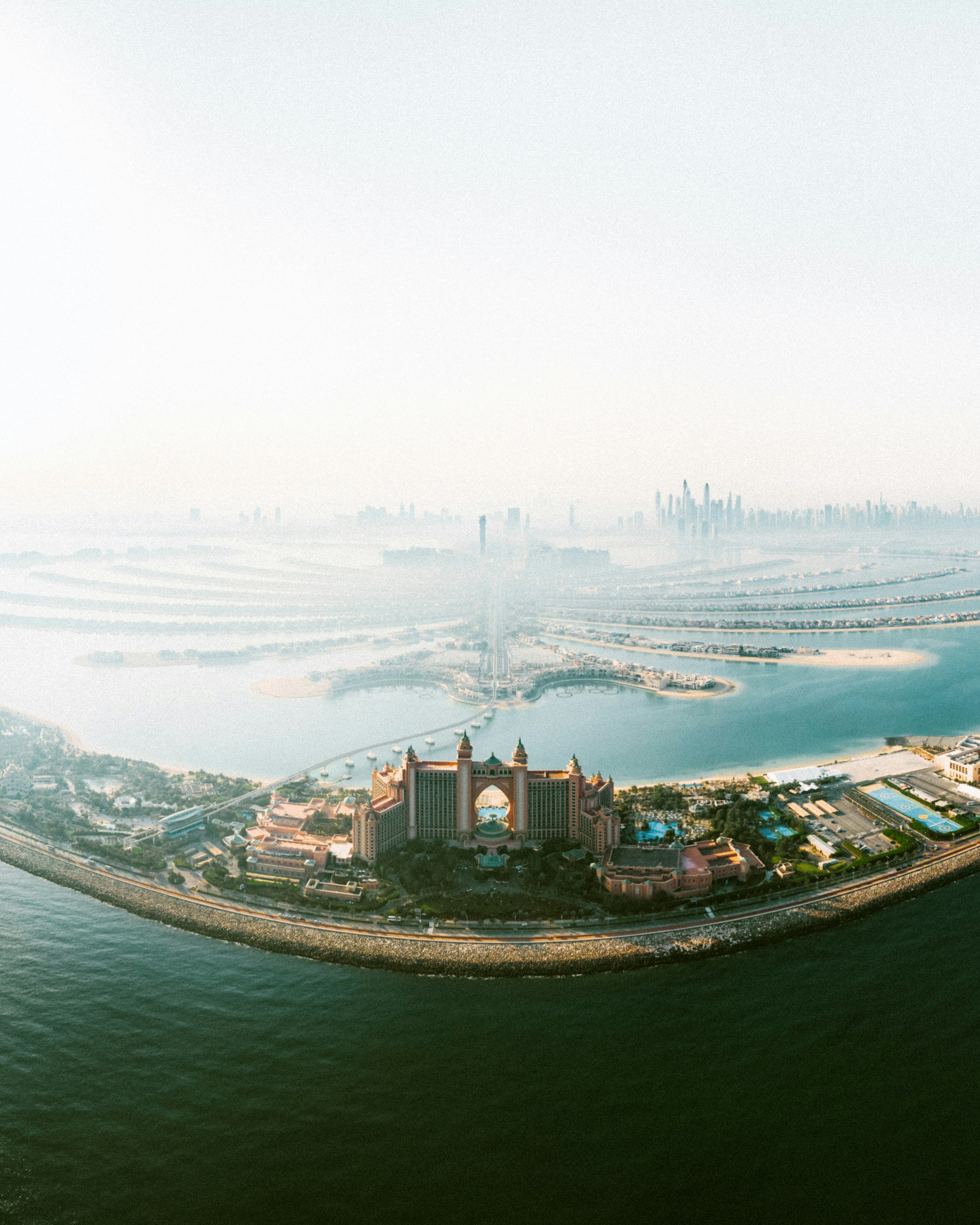
Owners with properties well-positioned in Palm Jumeirah, Downtown Dubai, Dubai Marina, Dubai Hills, or Business Bay had no reason to panic. These areas resisted significantly better than off-plan projects in emerging or peripheral sectors. Asset selection and location proved to be decisive, as they always are in any market during times of tension.
This is exactly what we have always told our clients: the Dubai market rewards quality, location, and patience. Investors who followed this logic had nothing to worry about.
The April 7 Ceasefire: The Trigger the Market Was Waiting For
An Immediate Rebound, Documented by the Numbers
On the evening of April 7, 2026, Donald Trump announced a two-week ceasefire between the United States and Iran, negotiated by Pakistan. The Strait of Hormuz began to reopen. Financial markets reacted immediately: the main index of the Dubai Financial Market surged by 6.9% in the hours following the announcement. Shares of major developers recorded gains of up to 13%.
Property viewing requests jumped by 75% in the final days of March, even before the ceasefire was officially announced. The savviest investors had already understood that the window of opportunity was closing.
By April 23, 2026, the median price in Dubai stood at 1,839 dirhams per sq/ft, a level higher than pre-conflict prices in February. The price floor was confirmed. The recovery was well underway.
Developers in the Emirates reported a tripling of their client conversion rates in the weeks following the ceasefire, signaling a rapid shift from first-quarter caution to active investment. Off-plan transactions accounted for more than 80% of all activity in April—up from an already high 70% in Q1—indicating that buyers with a three-to-five-year vision were not deterred by the March correction.
The First Quarter of 2026: A Record Despite the War
Here is the figure that sums it all up. Despite the outbreak of the conflict mid-quarter, the first quarter of 2026 totaled 176.7 billion dirhams in residential real estate sales, representing a 23.4% year-on-year increase.
January 2026 recorded 72.4 billion dirhams in residential sales, making it the highest single month in the history of Dubai real estate. Additionally, over 139,000 rental transactions were registered in Q1, driven by continuous population growth and stable inflows of new residents.
A market that records the highest sales month in its history in January, goes through a regional war in March, and still finishes the quarter with a 23% year-on-year increase is not a fragile market. It is a market whose resilience has just been tested under extreme conditions and validated by the facts.
Dubai Has Proven Its Solidity: Advantage of the Immediate Recovery Window
The Dubai real estate market has just passed the ultimate resilience test. Don't miss out on the post-conflict buying window before prices return to February's record highs.
What many observers failed to realize immediately is the symbolic and strategic significance of what the Emirates accomplished during those five weeks. Faced with 35 Iranian drone and missile attacks in a single day, the Emirati defense system worked flawlessly. Daily life was never interrupted. Critical infrastructure held the line.
For an international investor, this demonstration carries a value that goes far beyond geopolitics. It proves that the Emirates' military capabilities are not just for show. They possess the assets, alliances, and systems required to protect their territory, residents, and infrastructure. This is a concrete factor that heavily weighs in country-risk assessments.
A Hub That Simply Cannot Be Ignored
The fundamentals of Dubai remain entirely intact: zero personal income tax, zero real estate capital gains tax, a stable currency pegged to the US dollar, a 5% GDP growth projection by the IMF for 2026, 225,000 new residents expected this year, and a Golden Visa program that converts investors into long-term residents.
Dubai's regulatory framework and robust infrastructure continue to attract international capital. The fundamentals have not changed; only the pace temporarily slowed. This is the precise phrasing used by Anshuman Magazine, CBRE's Chairman for India, Southeast Asia, the Middle East, and Africa. When the world's largest real estate advisory firm states this publicly, investors would do well to listen.
What History Teaches Us About Dubai's Crises
It is time to stop treating every crisis as if it were the first. Dubai has experienced four significant corrections since 2008, and each one was followed by a recovery that surpassed the pre-correction peak. In 2022, during the invasion of Ukraine, Dubai recorded a then-absolute record of 44,000 real estate transactions, largely fueled by capital seeking a neutral and stable jurisdiction.
The pattern is consistent and undeniable. Dubai real estate has never permanently declined due to a regional geopolitical event. It has paused. It has moderately corrected. And it has rebounded, driven by global capital that was simply waiting for a clear signal to deploy.
Investors who acted during phases of uncertainty have systematically outperformed those who waited for the news to become perfectly reassuring. This was true for 2008, 2020, and 2022. It remains true in 2026.
What We Concrete Do for Our Clients in This Market
At FFI, we did not abandon the Dubai market during the conflict. We observed it closely, tracked data week after week, and continued to identify the opportunities this period created for well-guided investors.
Institutional analysts have already projected that, under a comprehensive peace agreement, prices will return to pre-crisis levels within three to six months, with the DFM Real Estate Index rallying past 15,000, driven by pent-up demand re-entering the market simultaneously.
This scenario is currently playing out. The recovery of the Dubai real estate market following the April 2026 ceasefire demonstrates its sheer strength and adaptability. With confidence restored, investors and buyers are actively re-entering the market, creating momentum across all segments.
What we are offering our clients right now is precisely this nuanced analysis: identifying assets that suffered a minor dip in sentiment without any fundamental reason, located in premium areas that recover first and fastest, backed by solid developers who will not slash prices once demand returns. This is a buying window. It is brief.
The Future: A Structural Recovery, Not Just a Simple Rebound
Housing demand has rebounded sharply, with buyers actively exploring ready-to-move-in properties and off-plan projects, particularly within premium residential communities. European, South Asian, and Middle Eastern buyers are active once again, driven by the reduction in geopolitical risk. Luxury and beachfront properties are recording the fastest recovery.
Knight Frank projected a 3% increase in the prime segment for 2026, even before factoring in the ceasefire effect. Given the current momentum, this figure could easily be surpassed.
The underlying trajectory has not changed. Dubai welcomes over 200,000 new residents annually. Its population continues to grow. Major international corporations continue to set up operations here. Infrastructure projects keep moving forward. And the emirate has just proven, in an unexpected yet spectacular fashion, that it can function even under direct military pressure.
This is not a market that merely survived a crisis. This is a market that went through a crisis and emerged with heightened credibility.
Are You Looking to Analyze Current Opportunities in Dubai?
We support investors looking to position themselves in the Dubai market within this recovery context: project selection, premium area identification, legal and tax structuring, and end-to-end guidance.








.png)

