Ukraine: a US-Russia diesel deal and revived peace talks, what it means for investors watching this market
Washington and Moscow are doing business again: our reading of the post-war outlook, from Lviv to Odesa
by
Adrien Boucher
On 10 October, Donald Trump announced a Russian diesel deal and lifted some sanctions, and peace talks on Ukraine are gathering pace. Reconstruction measured in hundreds of billions, war discounts in Lviv, Kyiv and Odesa: why FFI is preparing this market, and what still holds us back.
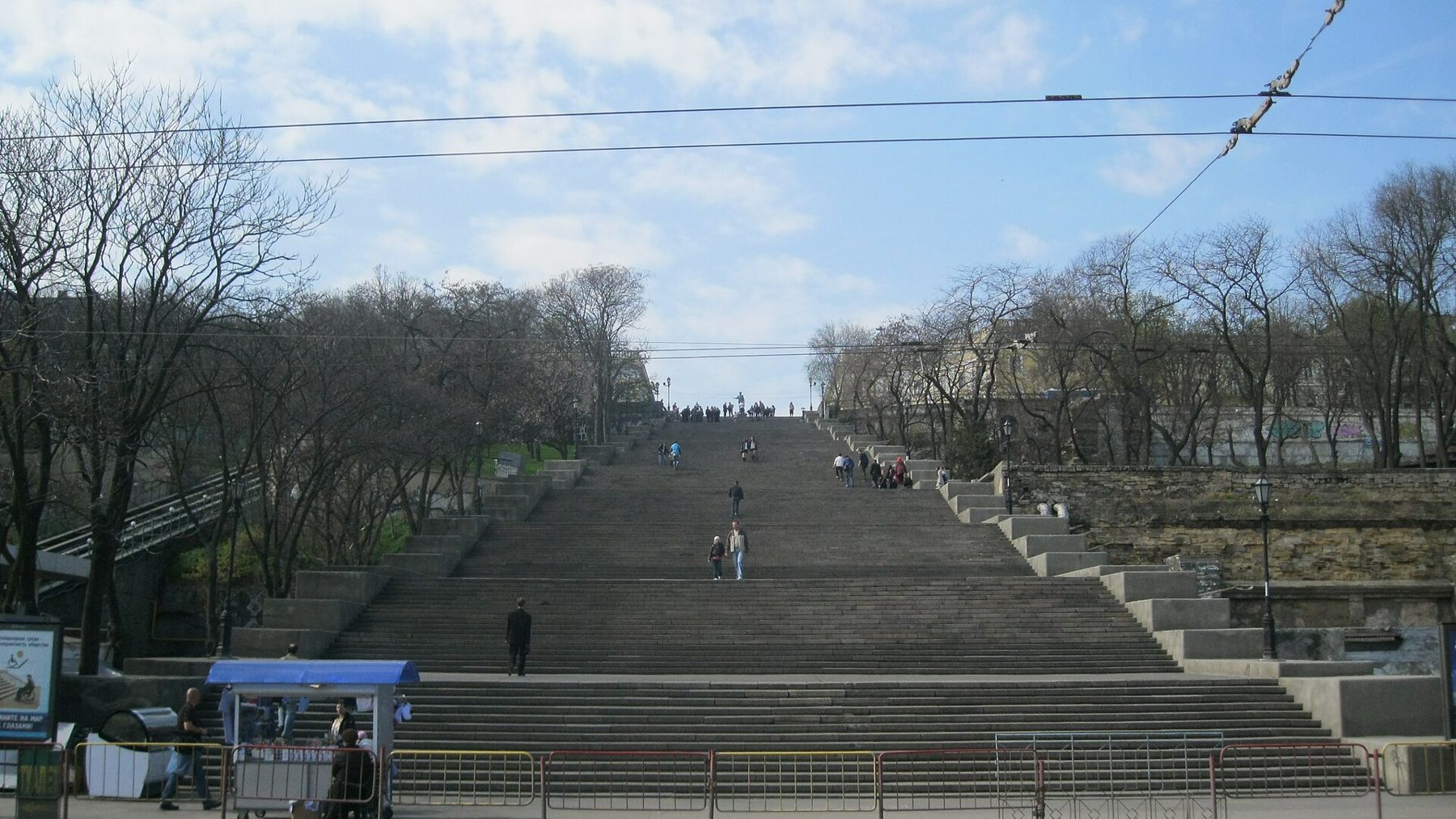
Odesa, Ukraine's third city and its great Black Sea port. Photo: Oleh Kushch, CC BY-SA 4.0, Wikimedia Commons
Washington and Moscow are talking business again
In the space of a few days, the Russia-Ukraine file has moved faster than most observers expected. On 10 October, Donald Trump announced that he had negotiated with Vladimir Putin the delivery of large volumes of Russian diesel to the American and global markets, lifting part of the sanctions on Moscow to make it possible. On 14 October, the Kremlin said the first contracts would be signed "in the coming days", and Russian Deputy Prime Minister Alexander Novak spoke of an eventual return to 3 to 3.5 million tonnes, the level seen before Western sanctions.
A commercial deal of this kind between Washington and Moscow, while the war is still going on, is not a detail. It shows that the two powers are doing business again, and that Ukraine has become part of a much broader negotiation.
Diplomacy is following. On 13 October, Volodymyr Zelensky said he had sent US envoys Steve Witkoff and Jared Kushner proposals for new meetings. On 19 October, Secretary of State Marco Rubio urged Kyiv and Moscow to focus on peace talks. According to Axios, Witkoff is heading to Oslo to work with Ukraine and its European allies on a peace proposal to put to Russia. The Kremlin has acknowledged that a "hypothetical" three-way summit is being discussed, and Vladimir Putin has reportedly suggested raising it with Donald Trump and Xi Jinping at the APEC summit in November.
None of this amounts to a peace deal. The territorial questions remain unresolved. But the picture is clear enough: the main players are starting to sketch out what comes after the war. And what comes after is enormous in economic terms.
What was already in place
These developments build on a year of groundwork. A 32-hour ceasefire was observed for Orthodox Easter in April 2026, followed by a truce for the 9 May commemorations, both marred by violations. Three-way talks between the United States, Ukraine and Russia were held in Abu Dhabi and then in Geneva in February.
Above all, the Paris Declaration signed in January 2026 by 35 countries set out a framework of security guarantees for Ukraine in the event of a ceasefire: multinational monitoring forces, coordinated military and financial support, and response mechanisms in case of renewed aggression. The US-Ukraine Reconstruction Investment Fund, ratified by Ukraine's parliament in May, is now operational, and reconstruction assistance of up to 800 billion dollars is being discussed on both sides of the Atlantic.
Why we have been watching this market for months
At FFI, we have clear criteria for deciding when to open a market to our clients. We do not go in too early, even if that means leaving the first gains to others. We prefer to enter when the fundamentals can be verified, the partners identified, and the risks measured.
Ukraine is not there yet. But we have been following it closely for months, and the diplomatic acceleration of recent weeks reinforces our view that it deserves serious preparation.
A reconstruction effort without precedent in post-war Europe
Ukraine's reconstruction needs are estimated at between 500 billion and one trillion dollars. The European Union has set up a 50-billion-euro Ukraine Facility, and development lenders such as the World Bank, the EBRD and the EIB are already positioning themselves on priority sectors. For comparison, the Marshall Plan represented around 130 billion dollars in today's money. The sums now being discussed for Ukraine are six to eight times larger, for a country of around 40 million people.
When reconstruction on that scale gets under way, it creates massive demand for property: housing for construction workers, offices for international organisations and returning companies, shops for a restarting economy, hotels for the consultants and investors who follow. That cycle has played out in every post-conflict market of recent decades, from Bosnia after 1995 to Iraq after 2003.
Podil, one of the Kyiv districts where premium demand is concentrated. Photo: Maksym Kozlenko, CC BY-SA 4.0, Wikimedia Commons
War discounts create opportunities
In the Ukrainian cities least exposed to the fighting, property prices have corrected since 2022 without collapsing. In Lviv, largely spared direct destruction, transactions continue, supported by Ukrainian buyers and companies relocated from the east. In Kyiv, well-located properties in Podil, Pechersk or Shevchenkivskyi trade at discounts that would not have existed in 2021, reflecting geopolitical risk, uncertainty over the end of the war, and weaker solvent demand.
When the conflict ends, those discounts disappear. Demand returns, prices normalise, and investors who were positioned at the right moment capture a revaluation that cannot be replicated afterwards. Sarajevo after 1996, Beirut after the civil war, Tbilisi after 2008: each time, patient investors who held their positions through the uncertainty were rewarded by the rebound.
Prepare for the post-war market without taking unnecessary risks
We are following Ukraine closely and will open this market once our criteria are met. In the meantime, there are solid international markets where your capital can already work. Let's talk about your strategy.
Lviv offers the most acceptable risk profile for a foreign investor today. Some 70 kilometres from the Polish border, it has seen no ground fighting since the start of the war, and it has absorbed waves of internally displaced people, generating strong, steady rental demand. Gross rental yields there are around 7 per cent according to first-quarter 2026 data. Its UNESCO-listed old town and lively cultural life give it everything it needs to become a premium European destination once the war is over.
Lviv's historic centre, a UNESCO World Heritage Site. Photo: Romankravchuk, CC BY-SA 4.0, Wikimedia Commons
Kyiv: a capital that holds firm
Kyiv remains the country's economic and political capital. Institutions function, international companies maintain a presence, and the market keeps trading: the average price on the primary market was around 2,011 dollars per square metre at the end of 2025, slightly up over the year. Diplomats, consultants and staff of international organisations sustain premium demand, and Kyiv will be the first market to revalue when headquarters, embassies and financial institutions return.
Odesa: the highest potential, the highest risk
Odesa is the city that interests us most in the long run, and the one where we are most cautious in the short term. Ukraine's third city and a strategic Black Sea port, it has suffered damage during the war and its security situation remains more complex than in Lviv. That is precisely why discounts are deepest there, and why its post-war potential is the highest. We do not recommend investing in Odesa today. We do say it deserves serious analysis, so that investors are ready to act at the right moment.
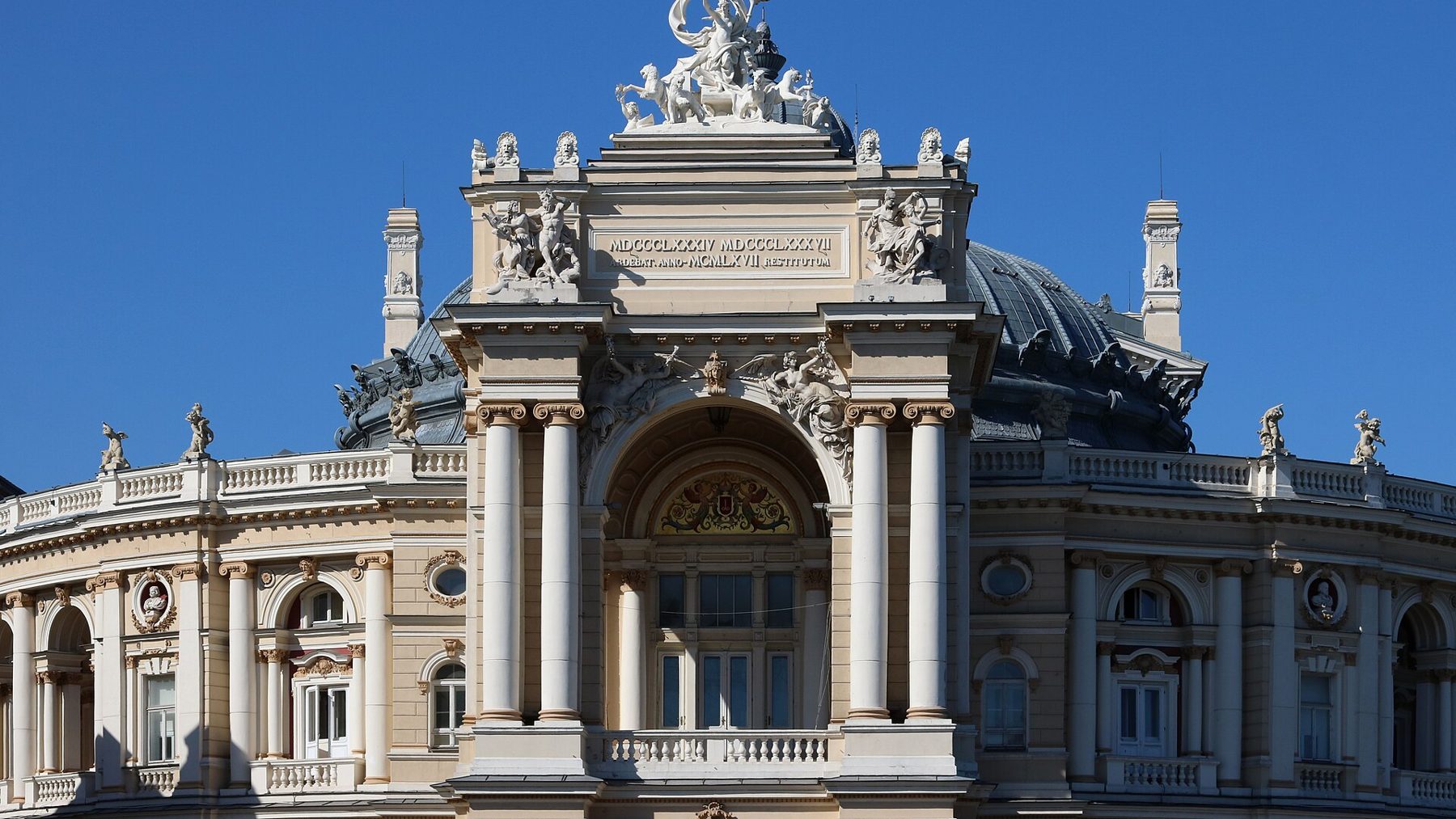
The Odesa Opera House, symbol of a city with considerable potential. Photo: George Chernilevsky, public domain, Wikimedia Commons
What is still holding us back
We are transparent about why we do not yet recommend Ukraine to our clients. There is no durable ceasefire, and occasional truces are not a sufficient security framework for foreign capital. We have not yet done our groundwork in the conditions we require: meeting several local lawyers, testing banking procedures, identifying trustworthy developers and managers, and checking title deeds in a country where land registries have been disrupted. And operational constraints remain real: unpredictable completion dates on new builds, more complex banking procedures and reduced liquidity on the resale market.
What the past few weeks change
They do not change our immediate recommendation. They do change the probability and the timing of our entry into this market. A year ago, a substantial ceasefire looked very uncertain. Today, Washington and Moscow are signing commercial deals, US envoys are multiplying meetings, a security framework has been agreed by 35 countries and the US-Ukraine reconstruction fund is operational. If a substantial agreement is reached in the coming months, we will be ready to go on the ground quickly, and to open this market to our clients once our own checks are complete.
For most investors, Ukraine will be a complement to an already diversified portfolio, not its core. It will suit those who can commit capital for five to ten years and understand that post-conflict markets create opportunities of a very different nature.
Conclusion
The Russian diesel deal and the revival of peace talks do not mark the end of the war. They are signs that the most powerful actors are starting to plan for what comes next. And what comes next in Ukraine, with reconstruction measured in hundreds of billions of dollars, a resilient and educated population and discounted assets in cities with real potential, is one of the most significant opportunities Europe will see this decade. We are not ready to take our clients there yet. But we are working on it.
Would you like to be among the first to hear our conclusions on Ukraine?
Book a call with our team: we will share our reading of the Ukrainian market and the international opportunities already open today. The first conversation comes with no commitment.